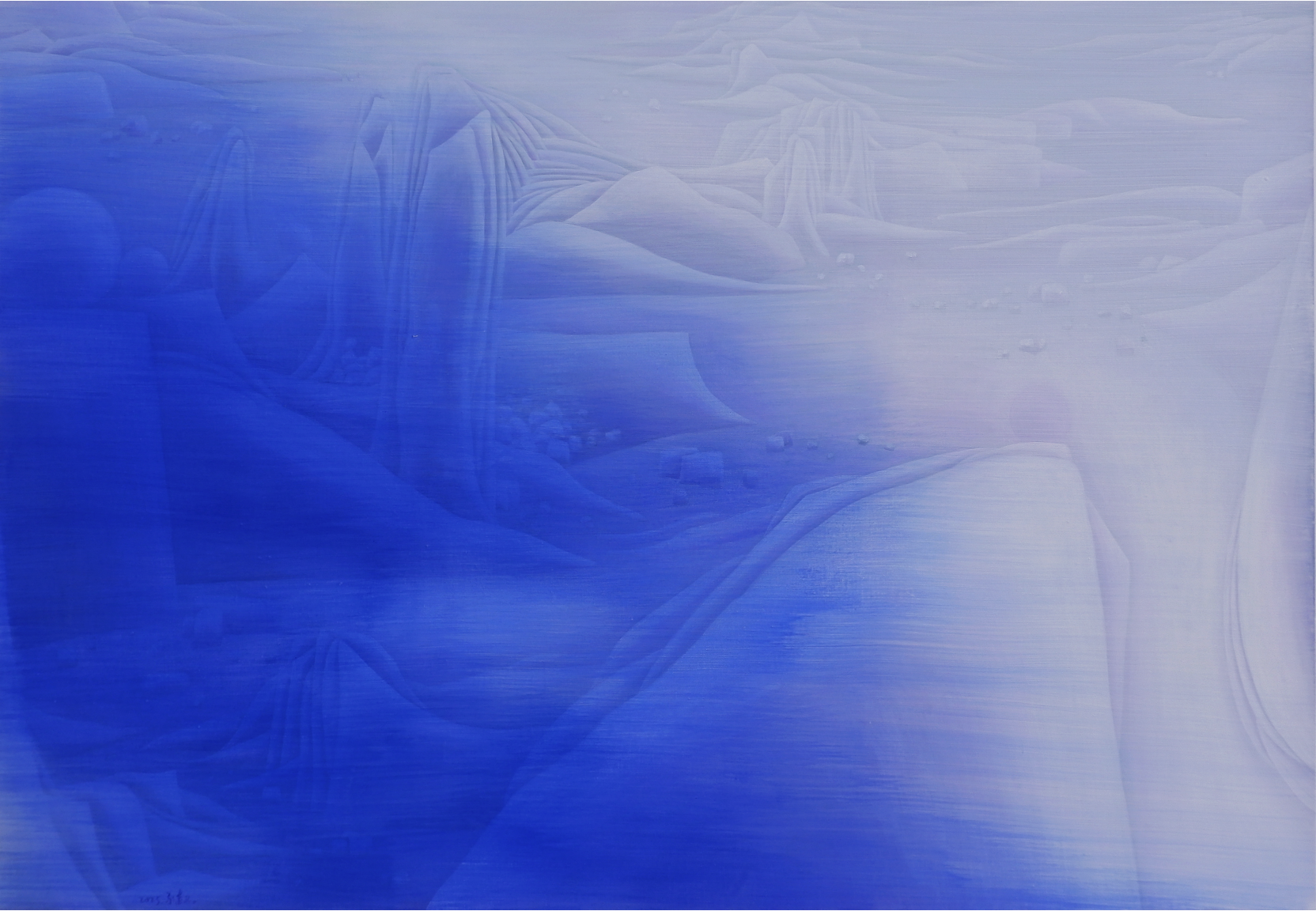
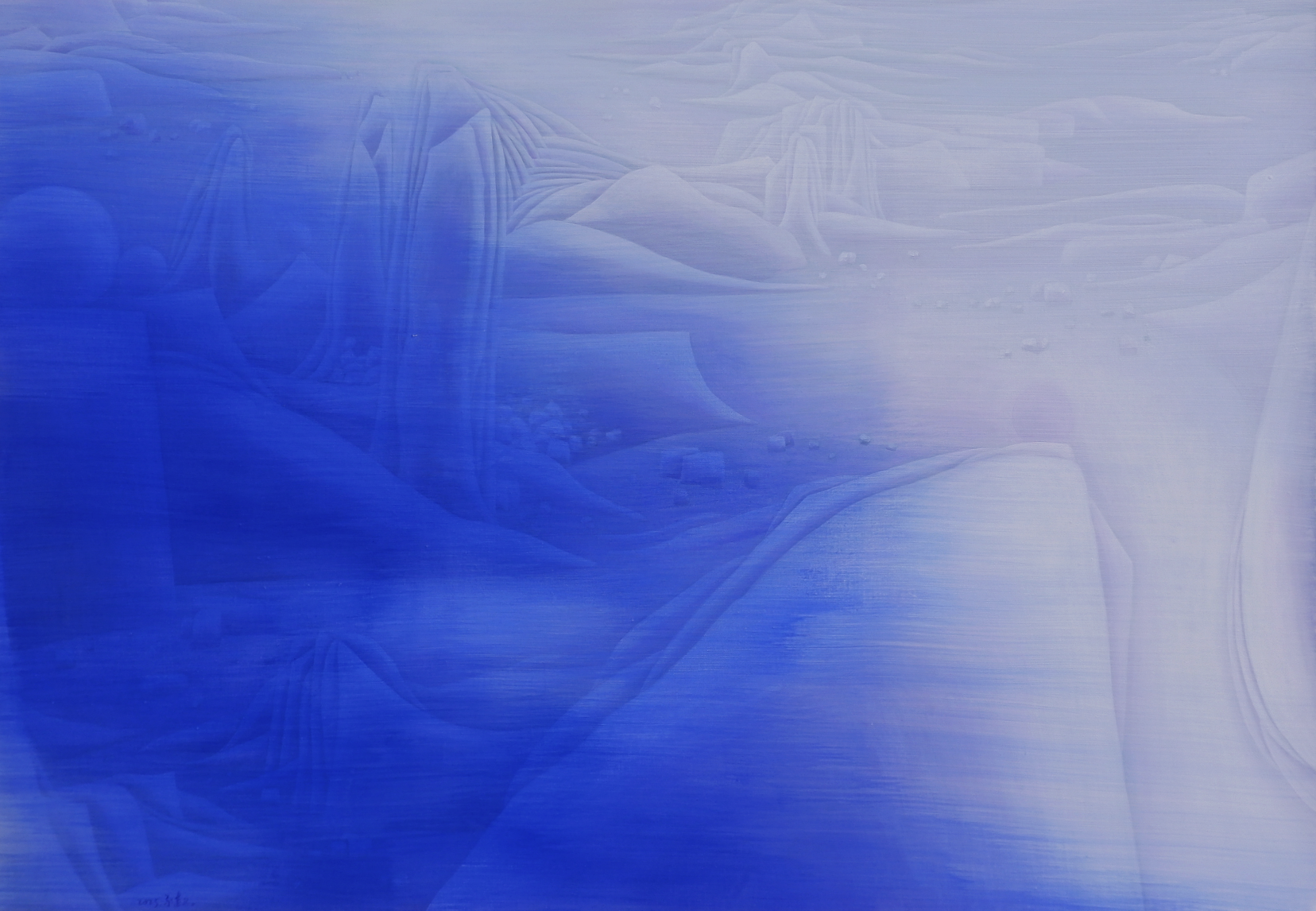
“No matter in what way, I want them to remember the work—whether in a good way or a bad way, through its style or its color. ”
Jianwei Ma’s artistic practice is defined by constant change. From restricting his palette to just four colors for nearly a decade to embracing increasingly diverse colors, from encounters with Yves Klein and Cy Twombly to a renewed engagement with Eastern painting traditions, his work reflects an ongoing search for what painting can become.
In this Artist Voice, Ma speaks with ArtID about finding originality, constructing his own language of color, the decentralized perspective of the handscroll, and why he believes the possibilities of painting may lie in the East. At the center of the conversation is a question that has continued to shape his practice: Who am I, and what is painting?
Artist Voice — Ma Jianwei
Q: We have noticed that your artistic style has undergone distinct changes over time. How did you discover your original voice and style? Were these changes made with intention?
A: I have always held this one belief—an artist should have their own unique outlook. They have to be unique, creative, and original. I think learning in the artistic field means not overlapping with others. Under this belief, along with my passion for expressing my thoughts, the changes in my style formed naturally.
Q: We have noticed that you tend to prefer different colors during different periods of your career. Some works highlight pink, while others highlight blue. How has your understanding of color changed throughout your creative process?
A: Yes, I think one's use of color changes as one ages. The interesting thing is, for the ten years after I graduated, I only used four colors: red, green, black, and white. I rationally restricted myself to using only these four colors.
As I progressed, I gradually started to add more colors to my palette. Still, I never use traditional color theory in my works. I try to construct my own color wheel and interpret the relationships between colors by myself.
Q: In some of your later series, the handscroll becomes a recurring format. What led you to work with the handscroll, and how does this way of viewing and unfolding an image help you express your ideas?
A: The world itself is diverse rather than centered around a single focus. Today, we often speak of “decentralization”—the world is dispersed. My paintings do not follow the fixed-point perspective of Western painting, but rather the shifting, multiple perspectives found in Eastern painting. I construct the scene subjectively, adding different elements as they come to mind.
I’m also drawn to the expansive field of vision that a handscroll offers. Compared with a sense of depth, I personally prefer a sense of breadth, and the handscroll allows me to achieve that. Of course, traditional Chinese ideas such as moving through a landscape as the view changes (移步换景), as well as the cultural concept of woyou (卧游, “traveling while reclining”), may also have influenced the way I work.
Q: If we were to ask someone who is unfamiliar with contemporary art to appreciate your work, how would you like them to perceive it?
A: Remember it. No matter in what way, I want them to remember the work—whether in a good way or a bad way, through its style or its color. It's okay if they don't remember me. I just want them to remember the work as it is.
Q: Is there an artist who had a major influence on your artistic career?
A: Yves Klein had a profound influence on me when I was in university. I would even say his work shocked me. He made me realize that art is not about whether something is painted well or not—it is about perception and ideas. To me, that is where the value of contemporary art lies.
Around 2016, Cy Twombly and Bada Shanren made me rethink some fundamental questions: Who am I? What is painting? I felt that Twombly had already brought painting to an end—at least within the Western system. In my view, the possibilities for painting should instead be sought in the East.
That was when I began to pay closer attention to Eastern traditions, to think about them, and eventually to study traditional Eastern painting. Since then, the Eastern qualities in my work have gradually become more and more apparent.
Q: Please leave one piece of advice for the new generation of artists.
A: I would say nothing. Because art truly begins from within—from the inner world of the individual artist. What an artist needs is to see more, think more, and practice more. An artist should not be bound by the opinions of others.